Han's research looks at how immersive technologies — head-worn displays ranging from lightweight smart glasses to hybrid mixed reality to fully immersive virtual reality — shape people and how they interact with the interface, others, and the world around them. Her research focuses on how these devices are understood and experienced not in isolation, but as embedded in contexts, including social (who is present, who are direct or indirect interactants), spatial (configurations of the physical and virtual space), and individual (attitudes someone has about the technology).
Methodologically, she conducts field experiments, controlled lab studies, and interview studies — measuring self-report, behavioral measures, and nonverbal/motion data to isolate mechanisms and build a fuller picture of people's experiences.
Han's work sits in many intersections, across communication, psychology, human-computer interaction, and education. Her work has been published in venues such as Journal of Computer-Mediated Communication, Computers in Human Behavior, Journal of Environmental Psychology, Computers & Education, and ACM Computer-Supported Cooperative Work and Social Computing (CSCW). Her work has also been covered by media outlets such as Psychology Today, CNN, and The New Yorker.
During her free time she enjoys writing sci-fi stories and playing videogames.

News
Selected Publications
Below are some highlighted works that Han has (co)-authored. For a full list of publications, check her CV, which includes journal articles, conference proceedings, non-archival conference papers/posters, and book chapters.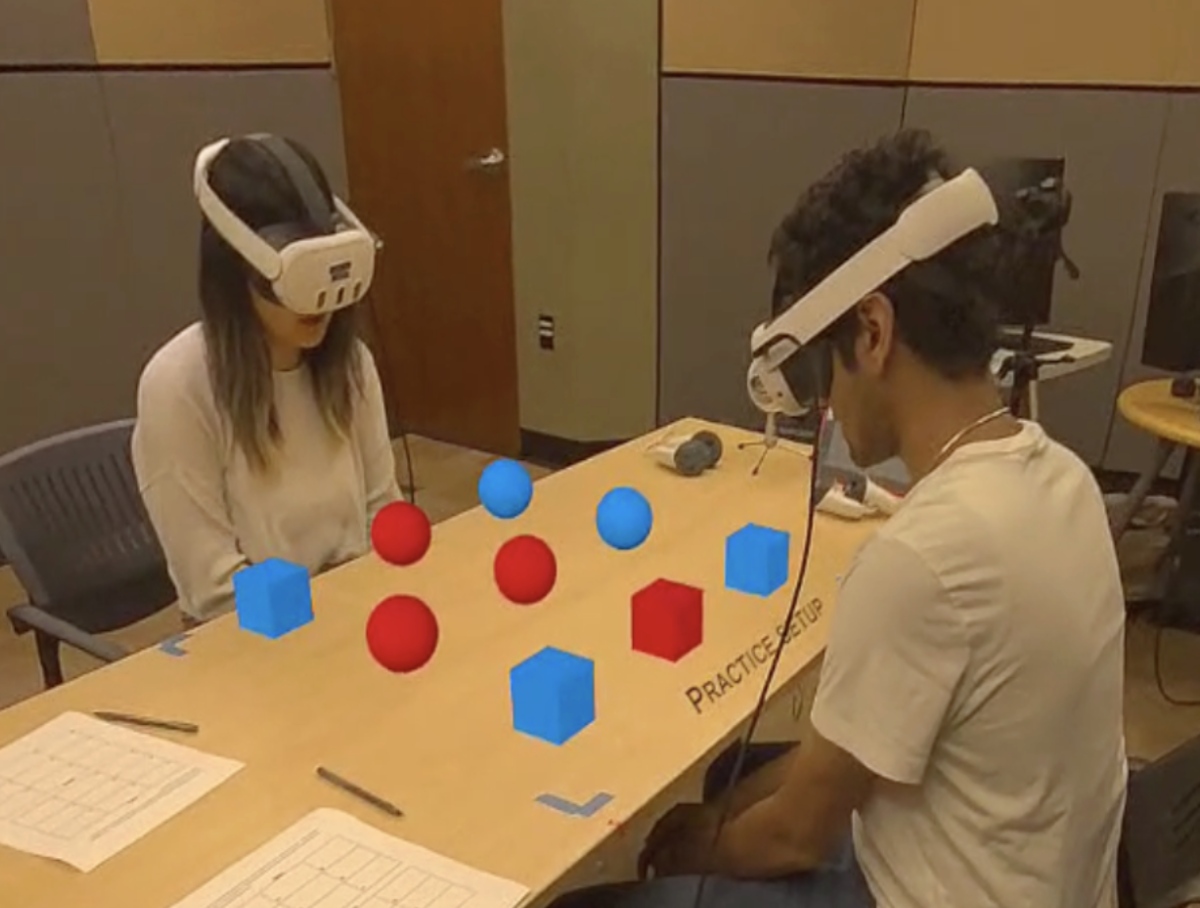
, Portia Wang, Monique Santoso, Keshav Rastogi, and Jeremy N. Bailenson
Computers in Human Behavior, 2026
pdf website nutshell description
What if each of us saw a different reality? From personalization to artefacts, immersive technology is already taking us there, where no two users share the same visual reality. In this study, each user (n = 104, 52 dyads) saw an arrangement of virtual objects through MR, with some objects positioned differently from their partner's view. After silent observation, users discussed and agreed on a final list of virtual objects. Results showed that having greater perceptual discrepancies led to less dyadic synchrony and affected decision-making. The manipulation did not affect trust, but greater discrepancies lowered willingness and confidence.

Jeremy N. Bailenson, Cyan DeVeaux, , Monique Santoso, and Portia Wang
Nature Human Behavior, 2025
pdf website nutshell description
This review article presents five canonical psychological research findings in VR over the past three decades: (1) the benefit of being there depends on the activity, (2) self-avatars influence behavior, (3) procedural training works better than abstract learning, (4) body tracking makes VR unique, (5) people underestimate distance in VR. We provide recommendations for both researchers and users of VR.
, Portia Wang, Cyan DeVeaux, Gabriella M. Harari, and Jeremy N. Bailenson
Thinking Skills & Creativity, 2025
pdf website nutshell description
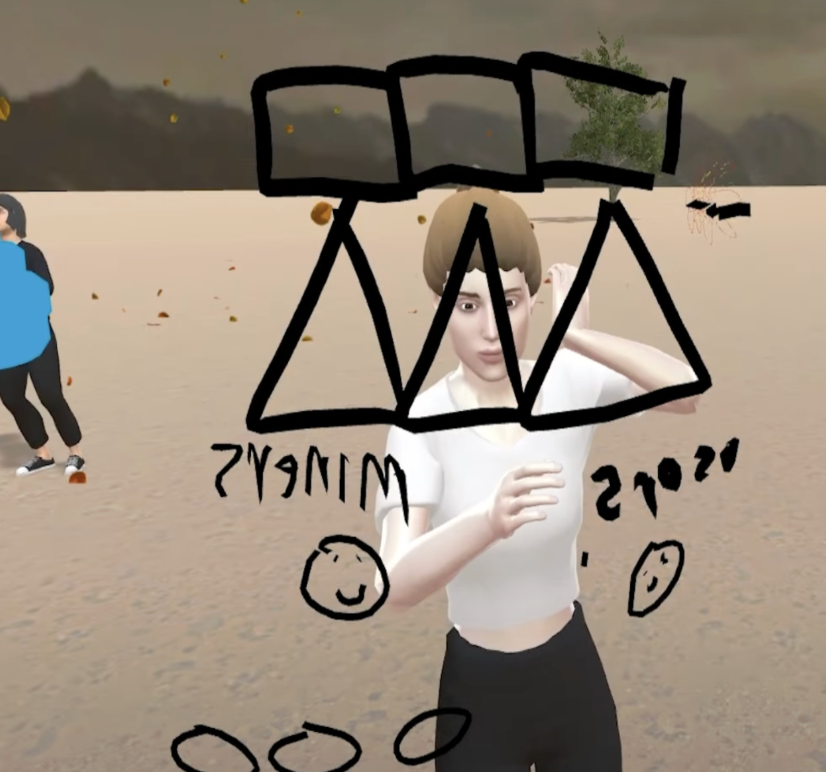
This article (1) looks at the role of virtual mobility on how/what people create in VR and (2) introduces a VR-specific creativity coding scheme. Restricted movement leads to fewer deletions, fewer 3D models, shorter creations, and less practical designs.
, Ian Strate, Kristine L. Nowak, and Jeremy N. Bailenson
Media and Communication, 2024
pdf website nutshell description
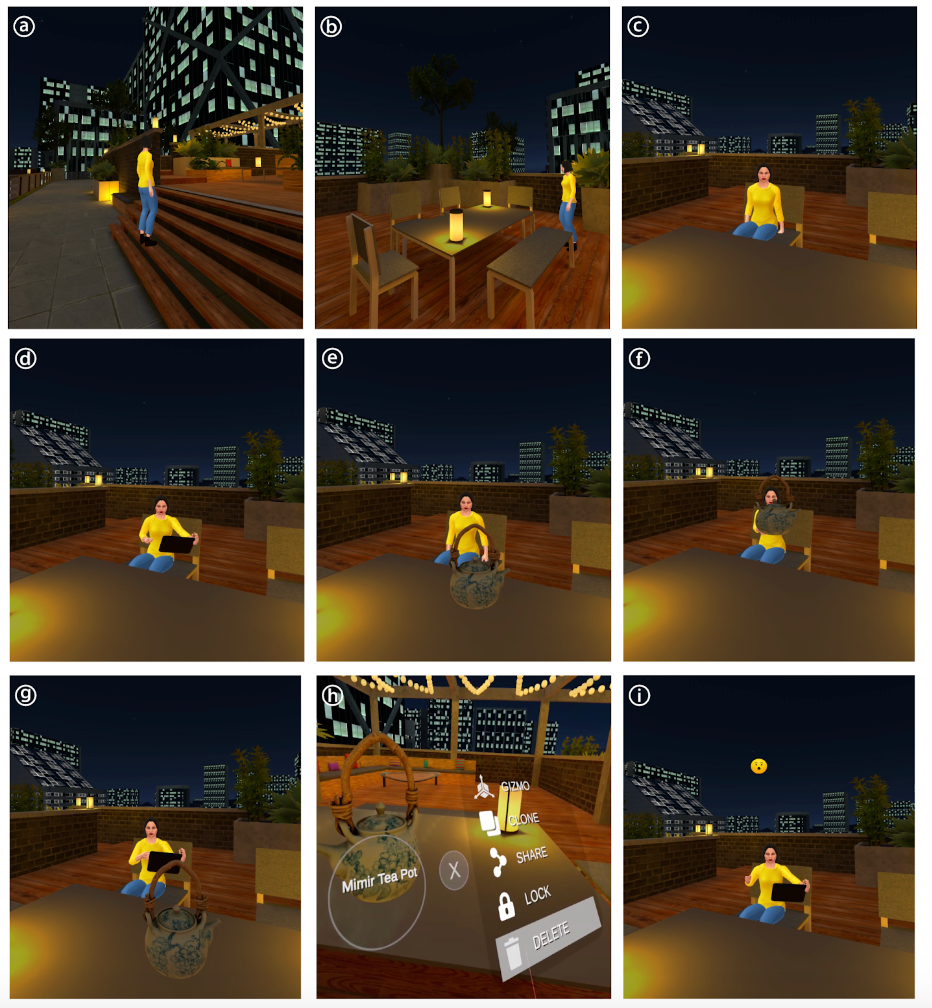
This article explores how different VR training methods (paper, video, VR) affect user experience, with tech anxiety influencing performance. Video or VR training helped mastery and reduced negative experiences; high tech anxiety participants struggled more regardless of method.
, Cyan DeVeaux, Mark Roman Miller, Gabriella M. Harari, Jeffrey T. Hancock, Nilam Ram, and Jeremy N. Bailenson
PRESENCE: Virtual and Augmented Reality, 2024
pdf website nutshell description
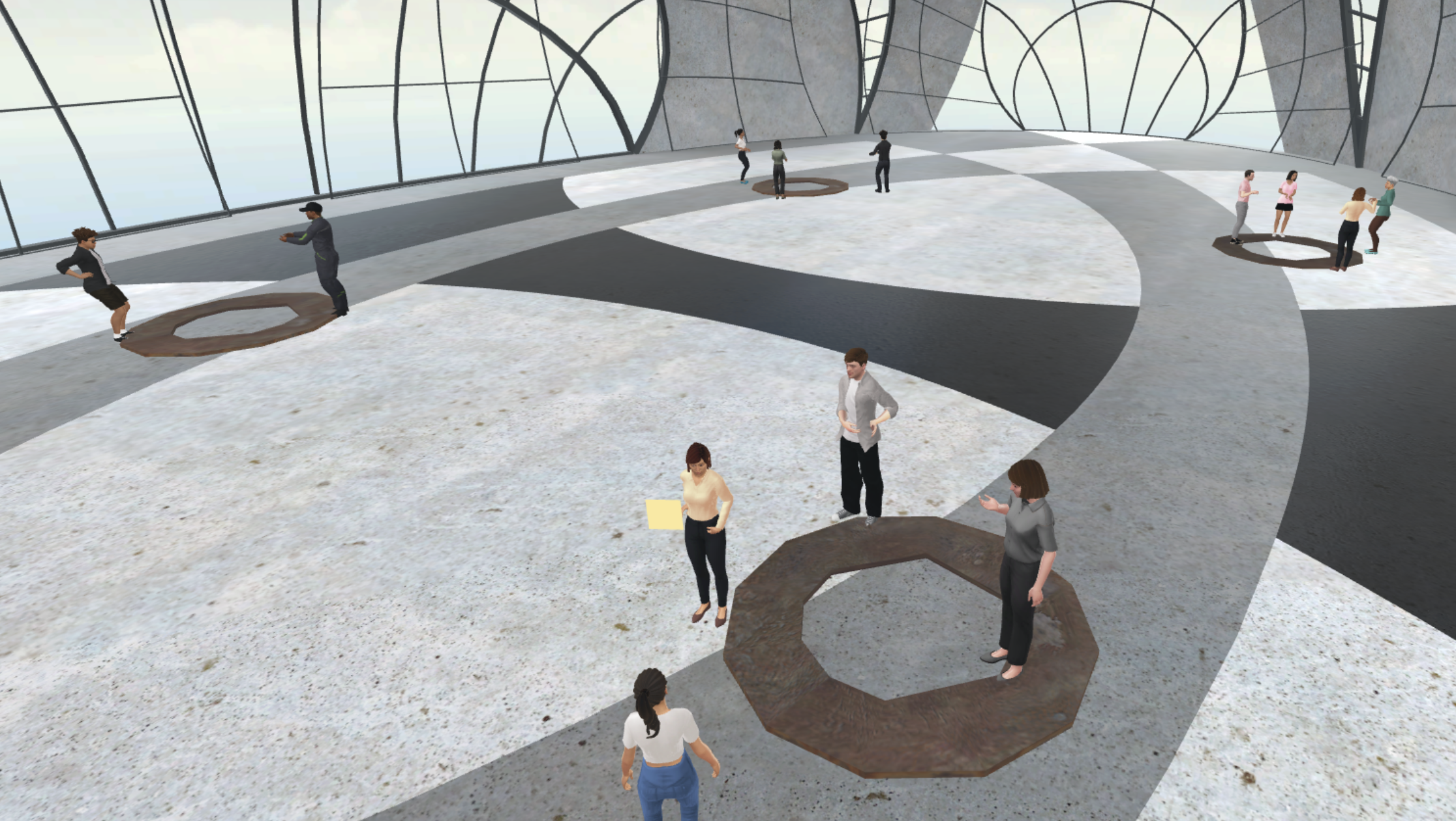
This 2-study article examines how virtual and physical social contexts affect nonverbal behavior. Study 1 (virtual) and Study 2 (physical) show variations in avatar movement, gaze, and interpersonal distance depending on the context.
and Jeremy N. Bailenson
Communication Education, 2024
pdf website news coverage news coverage 2 nutshell description
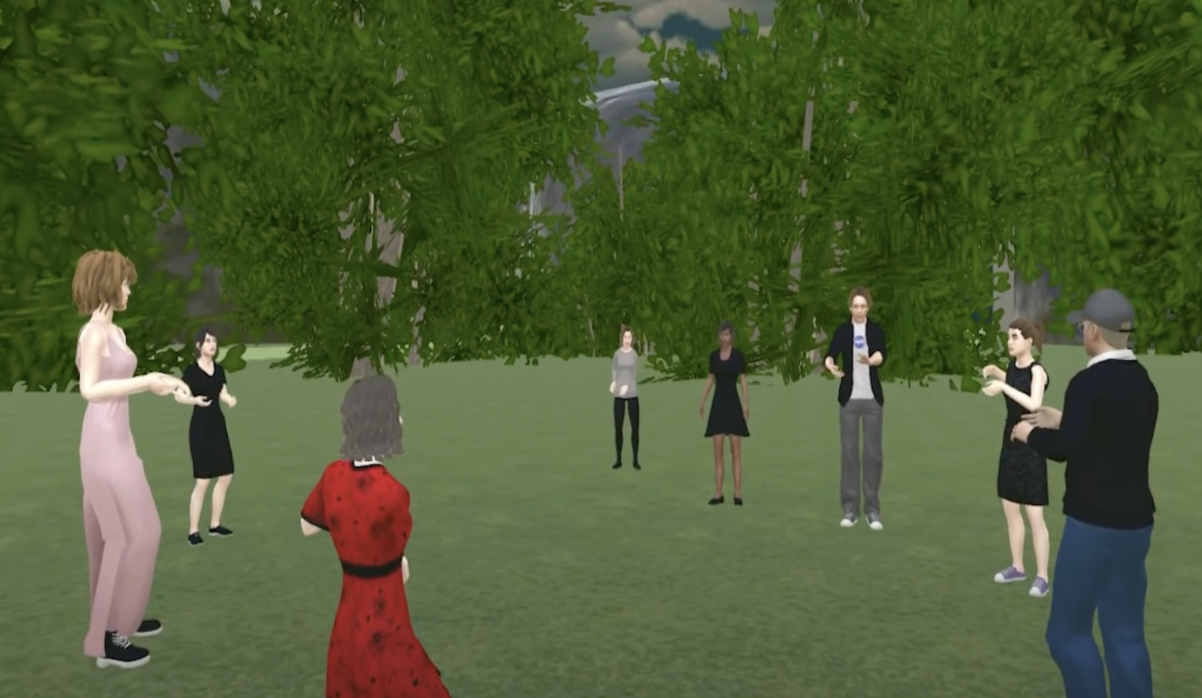
This article discusses integrating VR into classrooms through the Virtual People course. Key insights: acclimate students, select tasks, manage technical issues, and plan physical & virtual course setups.
, Cyan DeVeaux, Jeffrey T. Hancock, Nilam Ram, Gabriella M. Harari, and Jeremy N. Bailenson
Journal of Environmental Psychology, 2024
pdf website nutshell description
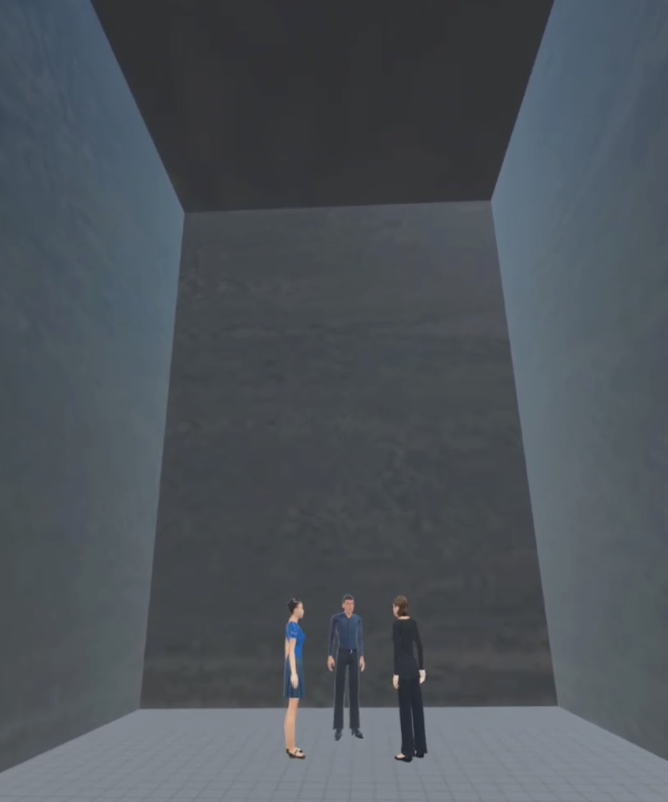
This article studies how virtual room properties (ceiling height, floor size) influence attitudes and nonverbal behavior during social interactions in VR. High ceilings increased restorativeness, awe, and social attention; larger floors increased awe; both factors combined influenced movement and interpersonal distance.
, Mark Roman Miller, Cyan Deveaux, Hanseul Jun, Kristine L. Nowak, Jeffrey T. Hancock, Nilam Ram, and Jeremy N. Bailenson
Journal of Computer-Mediated Communication, 2023
pdf website news coverage nutshell description
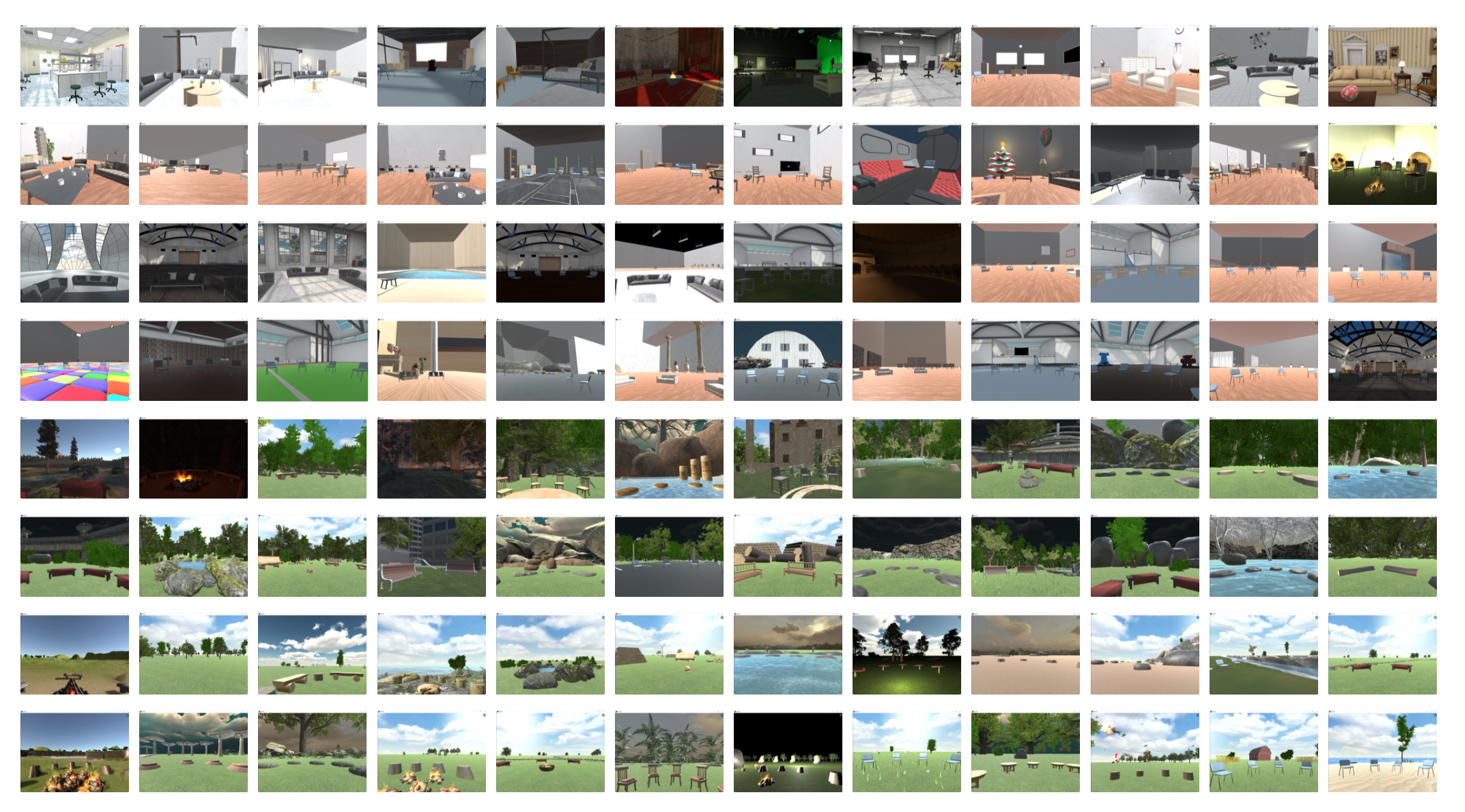
This 2-study article shows how avatar appearance and environmental context influence attitudes and behaviors in VR. Self-presence and realism increased over time; avatars resembling participants increased nonverbal synchrony but reduced enjoyment; outdoor spaces increased restorativeness and enjoyment.
, Kristine L. Nowak, and Jeremy N. Bailenson
Technology, Mind, & Behavior, 2022
pdf website nutshell description
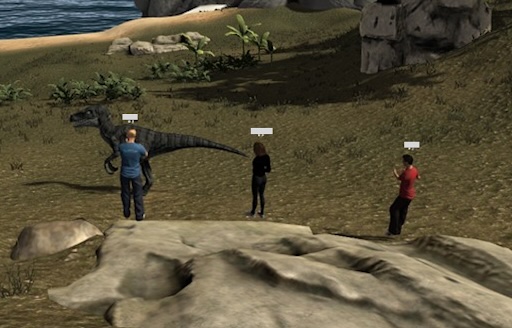
This study examines the challenges of implementing VR in distance education. Key takeaway: students must first learn VR itself before they can learn inside VR effectively.